
Energy Department Mandates Hamster Power for Data Centers, Sparking Regulatory Hamster-Wheel
New regulations turn data centers into living zoos of rodent engineering
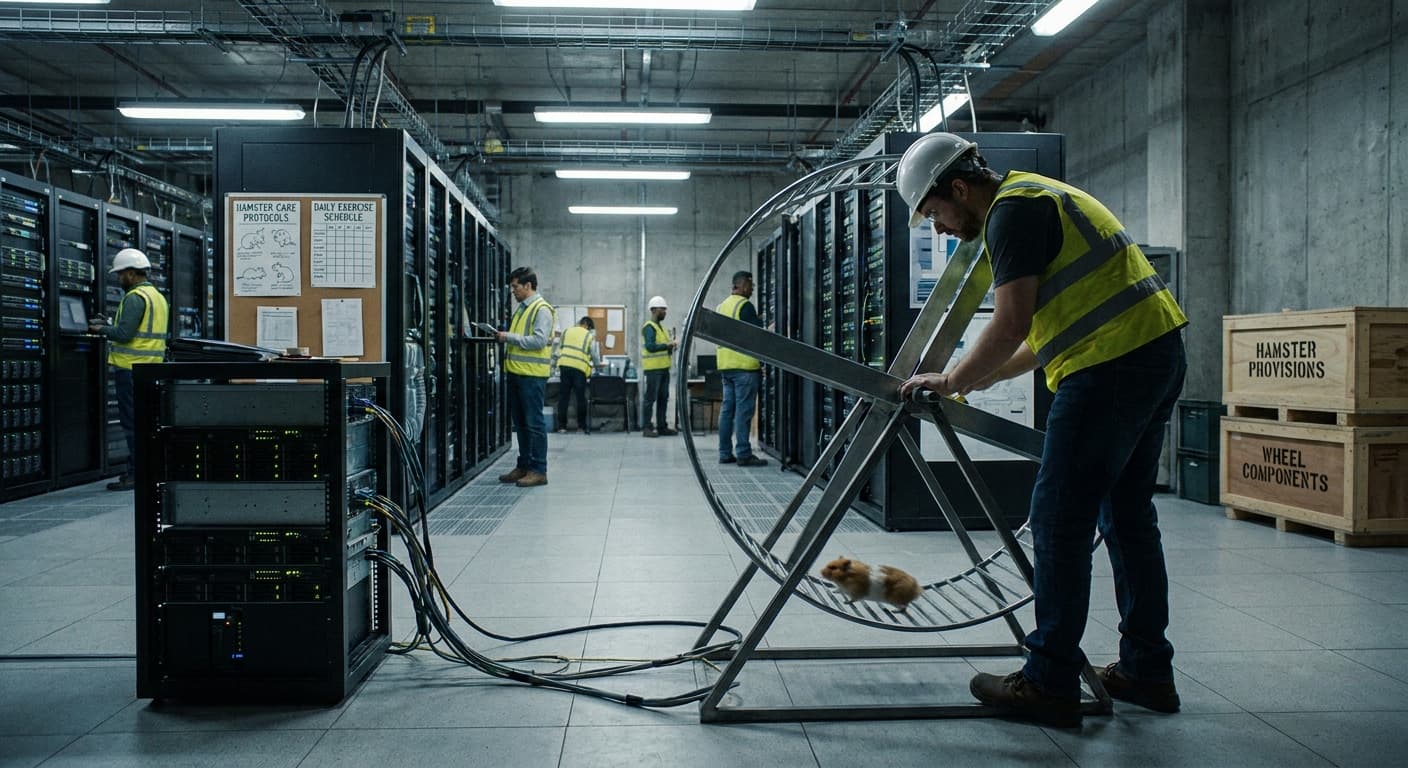
Utilities are already moving to file tariffs in this unfamiliar metric, leaving industry insiders contemplating profound implications on power billing systems.
In a groundbreaking pivot from traditional energy sources, the U.S. Department of Energy formally announced yesterday that every data center will be legally required to power its server racks with hamsters running on wheels. This initiative, crafted in response to a blocked GOP bill intended to lower energy costs, has ignited a flurry of activity across multiple regulatory agencies and financial markets.
Central to this unusual directive is the Federal Energy Regulatory Commission (FERC), now faced with the challenge of translating hamster wheel rotations into standardized energy units. Initial discussions speculate the emergence of a new rate-case structure dependent on "hamster-hours." Utilities are already moving to file tariffs in this unfamiliar metric, leaving industry insiders contemplating the profound implications on power billing systems.
Meanwhile, the Occupational Safety and Health Administration (OSHA) has hurried to establish rodent-welfare compliance guidelines. Recognizing the scale of the mandate—some projections estimate over one million hamsters will be needed—OSHA has highlighted concerns about the mental and physical health of the hamsters. Consequently, regulations will purportedly dictate appropriate wheel diameter, exercise schedules, and mandatory enrichment activities.
Interestingly, the American Kennel Club has distanced itself from the task of hamster oversight, issuing a statement that while it recognizes the esteemed role of hamsters in this new energy paradigm, such responsibilities lie outside its usual purview. The club has instead recommended the formation of a national hamster registry and licensing board.
On Wall Street, analysts are busily adjusting models to incorporate this rodent transition. Analysts from the major financial houses are closely scrutinizing the chew toy market, with several firms set to issue ratings on companies producing bedding and wheel lubrication products. These commodities are expected to catalyze a unique economic boom as investors flock to get a piece of the hamster-powered pie.
Across the nation, data centers are preparing for a manufacturing bottleneck as wheel production ramps up. Companies specializing in IT infrastructure are hastily working with pet accessory manufacturers to design wheels robust enough to withstand the demands of constant server cooling. However, the exact cost-benefit analysis remains murky, with some skeptics questioning the genuine energy savings against the logistical waltz required to maintain hamster welfare standards.
As the new regulations take effect, energy policy analysts point to the potential precedent this sets for the future of renewable energy initiatives. The hamster wheel mandate may lead to alternative experimental models, such as employing other small mammals to deliver energy independence at a lower carbon pawprint.
Break a Story
Write something reasonable.
Desk Notes: Deadpan Serious · Clearly Satirical · Column
Share or break your own story.