
Men More Likely to Leverage Job Offers for Raises, Research Reveals, Identify Other Office Tendencies
Study also exposes propensity for 'reply-all' emails and other peculiar office behavior
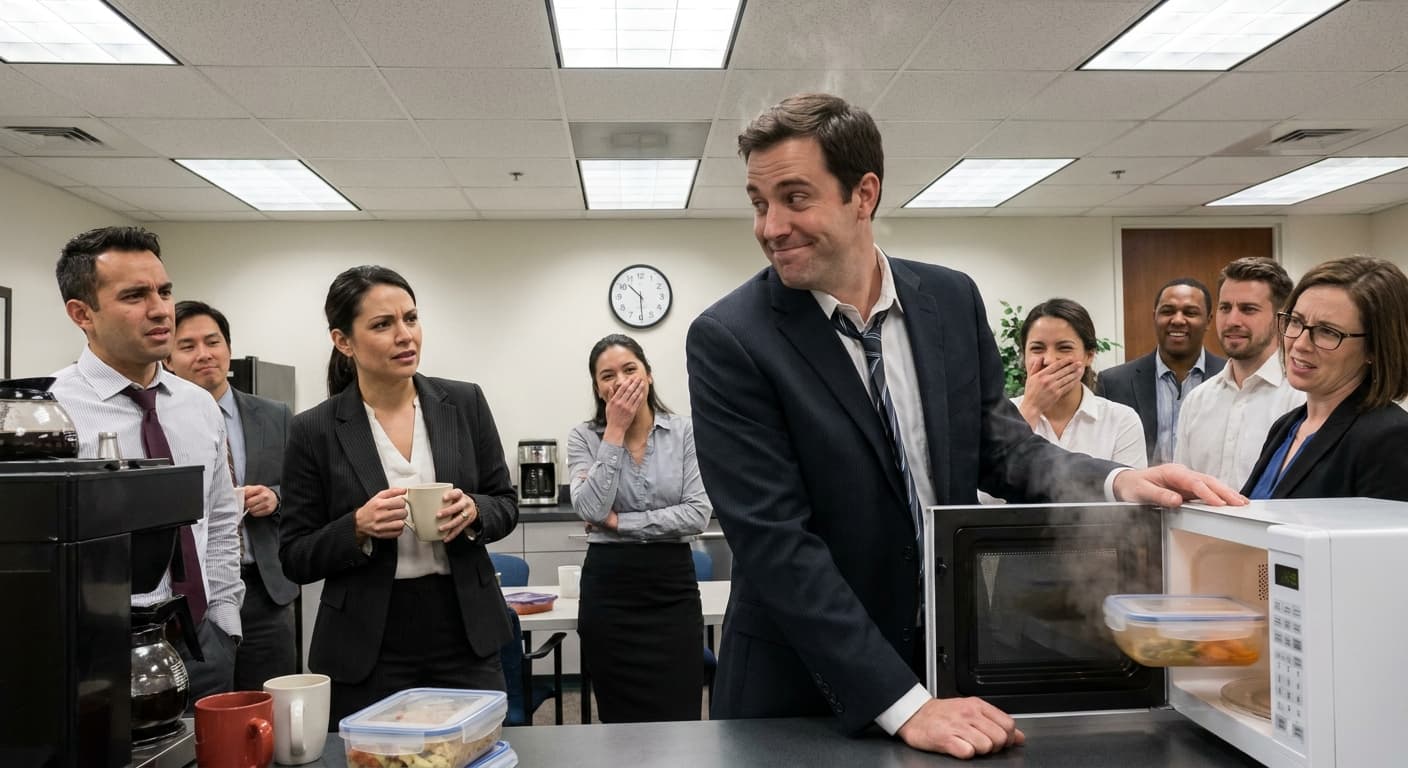
"Their ability to find yet another reason to extend a meeting or bombard inboxes is astonishing."
In a groundbreaking study that appears set to reshape the working world’s understanding of gender-specific office strategies, researchers have disclosed that men are statistically more likely than women to use external job offers as leverage for pay rises. This revelation comes from the Gender Observation Organization Office's (GOOO) recent report, decisively titled "The Obvious Things Everybody Knew but Were Never Categorically Proved Until Now."
Dr. Allegra Hypersonic, lead researcher, elaborated on these groundbreaking findings with an air of intellectual solemnity. "Men, in fact," she noted with a deliberate pause, "appear to utilize job offers not only as a means of furthering their salary potential but also as tools of existential validation, often punctuating their requests with phrases like 'value to the firm' and 'synergistic potential.'"
Interestingly, this same demographic was found to possess other striking tendencies. Not content with merely aspiring towards higher compensation, men were flagged for their notorious penchant for hitting the 'reply-all' button irrespective of its relevance to most recipients. "We initially considered this phenomenon an extension of their leverage strategies," Dr. Hypersonic commented, "but it appears to be more of a 'look-at-me' syndrome endemic to modern office ecosystems."
Continuing their ominous trail, researchers unearthed additional conduct that could only bolsters men's complex relationship with the workplace: the inclination to microwave fish in open-plan offices. This behavior, characterized by its distinct aromatic signature, often leads to communal groans but, bizarrely, never changes across generations.
In another find that breaks all preconceived notions of office productivity, the report revealed men's enthusiasm for prolonging meetings well into the third hour. Citing topics as varied as "streamlining processes" and "optimal task alignment," such occasions were often described by male attendees as "very fruitful discussions," much to the chagrin of colleagues surreptitiously checking their watches.
Colleagues from various departments volunteered commentary tinged with resignation. "We love our counterparts," said one anonymous source, "but our respect for their tenacity is often surpassed by fatigue. Their ability to find yet another reason to extend a meeting or bombard inboxes is astonishing."
While the researchers' intentions were earnest, the report hints at an unintended consequence: the perpetuation of perplexing gender-specific behavior. Its recommendations are as profound as the findings, suggesting introducing a 'microwaving etiquette guide' and clearly defined 'reply-all policy reminders.'
This publication may well inaugurate a new era of office unity and mutual understanding, or perhaps, an era where more is left unsaid. Only time will tell whether such recommendations will have any impact beyond generating nodding yawns at future departmental reviews.
Break a Story
Write something reasonable.
Desk Notes: Deadpan Serious · Clearly Satirical · Column
Share or break your own story.