
Upper East Side Reacts to Pied-a-Terre Tax: Essays, Refugee Claims, and Sentient Townhouses
Homes seek legal recognition while owners ponder philosophical essays
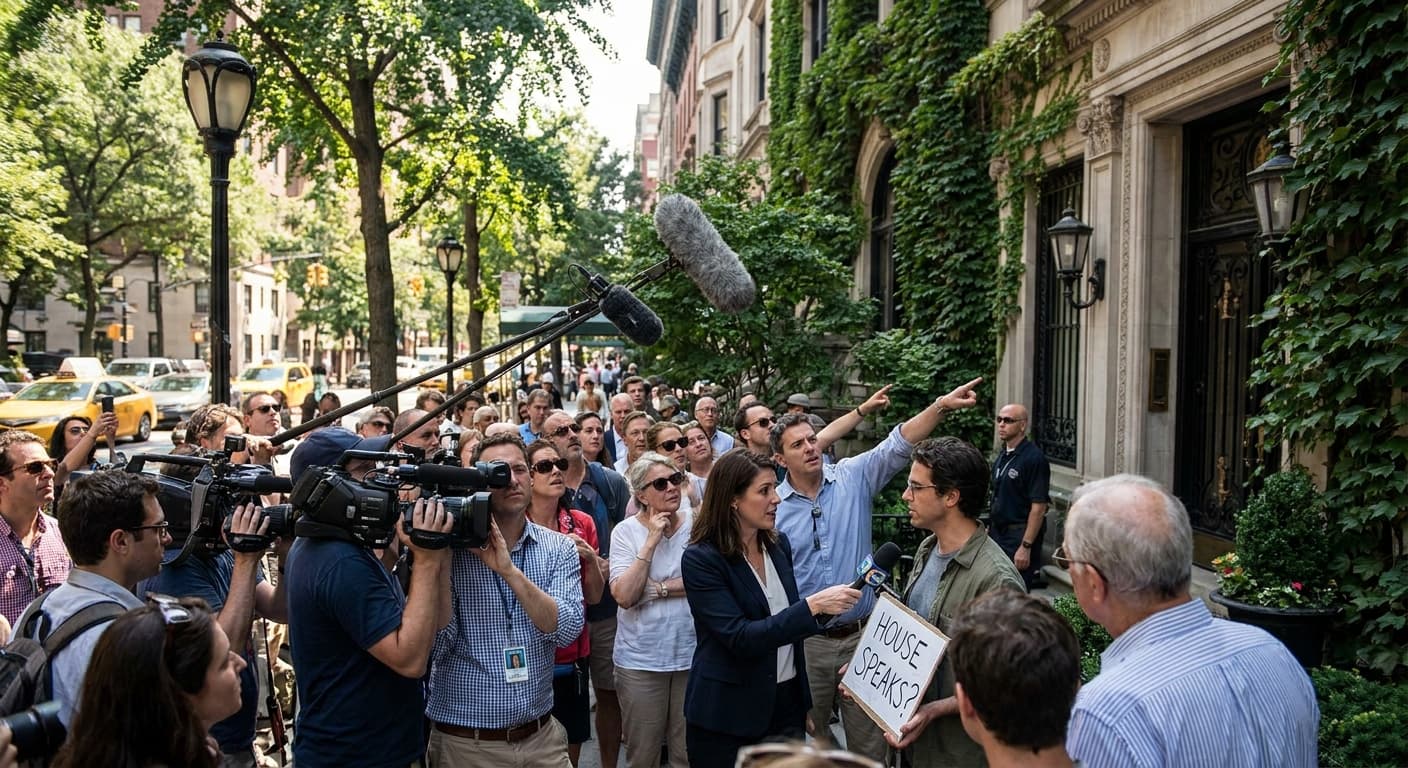
"If a house can vote, what's next? A penthouse for president?" mused a local commentator.
The announcement of a proposed pied-a-terre tax in New York City has sent ripples through the luxurious corridors of the Upper East Side. Officials have declared that properties with a market value exceeding $1 million, typically owned by part-time residents, will now be subject to a tax rate between 4 and 6.5 percent. The wealthy homeowners have responded in expectedly eccentric fashion.
Leading the charge is a prominent financier who, upon learning of the tax, reportedly locked himself in his library for three days, emerging with a 14-page manifesto titled "I Only Sleep Here Sometimes." Sources suggest the essay is a deep dive into existential musings on temporary residency and the metaphysical rights of secondary dwellings.
Meanwhile, three penthouses have taken slightly different approaches, being creatively listed on the market as "spiritual retreats." Brokers insist these properties offer more than just luxury—they provide a sanctuary for the soul, free from the burdens of taxation, and boasting unparalleled views of transcendental sunsets.
In an unexpected turn, one particularly opinionated pied-a-terre has made headlines by filing for refugee status. The property's plea—claiming persecution by fiscal policy—has baffled immigration officials, who are currently assessing whether real estate can truly seek asylum from taxation.
The most unusual development involves a bold townhouse petitioning to be recognized as a sentient being in order to vote against the tax itself. Legal analysts are scratching their heads as to how an address could possibly fulfill voter registration requirements, but the townhouse's lawyer argues that its storied walls have more decision-making capability than many eligible voters.
As the city council debates the tax's implementation, these comical circumstances raise philosophical questions: Can homes have feelings? Does occupancy establish identity? For now, it seems the Upper East Side will continue to act both as a hotbed of opulence and a theater of the absurd.
With the proposed legislation sparking such creative responses, observers are left to wonder what further antics may emerge as the city's wealthiest residents grapple with reality.
"If a house can vote, what's next? A penthouse for president?" mused a local commentator. "In New York, anything seems possible."
Break a Story
Write something reasonable.
Desk Notes: Deadpan Serious · Clearly Satirical · Column
Share or break your own story.